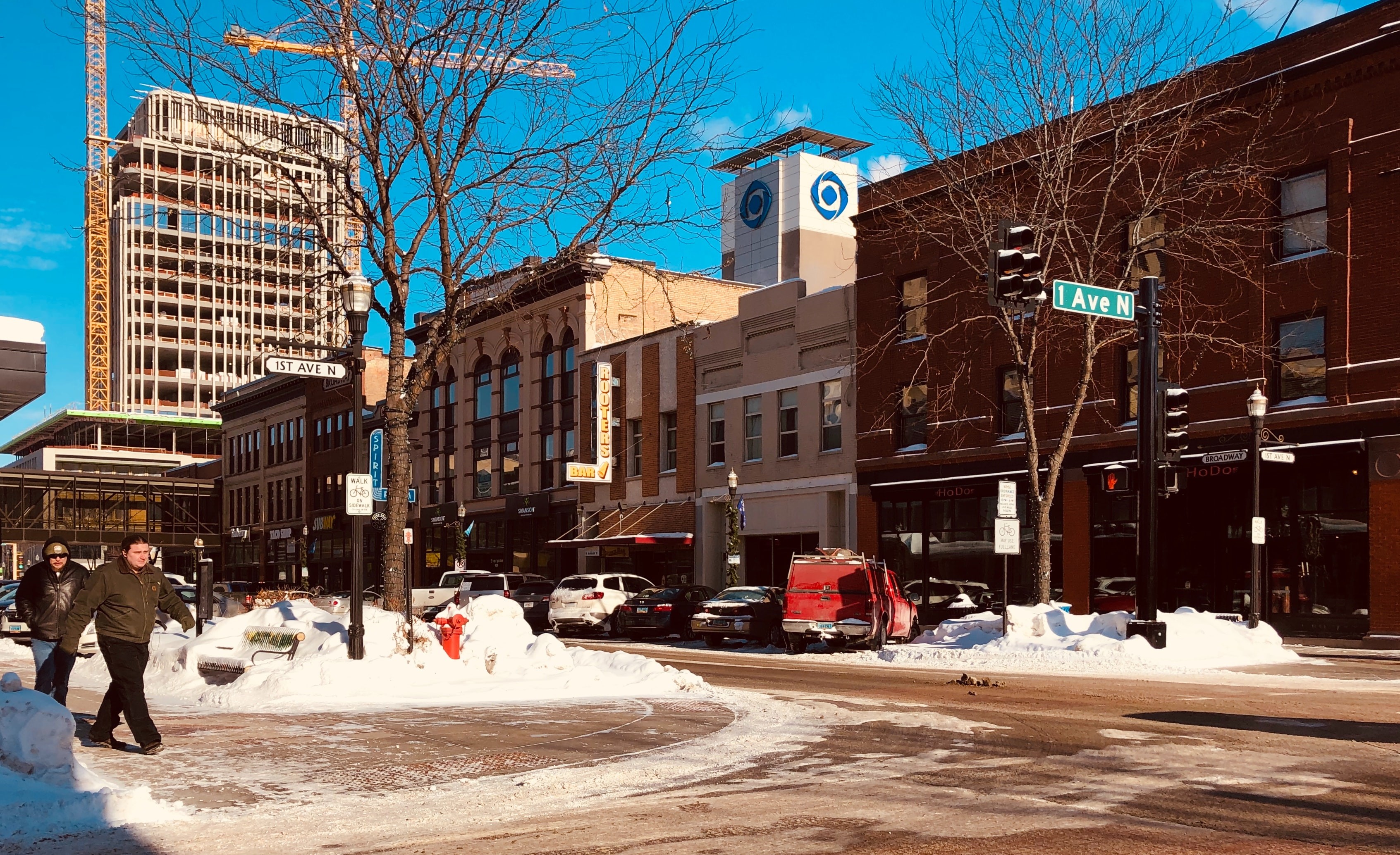
Fargo, North Dakota, was founded in 1871 on the western bank of the Red River of the North, in a flat region known as the Red River Valley. It has grown to cover 50.7 square miles on the border with Minnesota, with streets laid out in a grid pattern. Fargo’s economy is mainly driven by healthcare, technology, manufacturing, food processing, retail trade, and higher education. Its median age is 31.4 (2022).
Real estate in Fargo includes bungalows, and homes in Tudor, Colonial, Foursquare, and Colonial Revival styles. The typical home value is $284,617, up 9.6% over the past year (Zillow, 2022). The city’s various annual events, such as the Fargo Blues Festival, Fargo Fall Show, and Fargo Food Truck Festival, cater to a variety of interests.
Fargo sits at the intersection of I-29 and I-94. U.S. Highways 10, 52, and 81 also run through the city. The neighborhood of Amber Valley lies adjacent to I-94. It’s a quiet area that’s continually adding amenities, such as shops and restaurants. The Southpointe area, while smaller, draws families and retirees seeking a tranquil place to live. Families, as well as professionals, also gravitate toward Prairiewood for its central location and variety of housing: condos, apartments, and single-family homes.
Livability has deemed Fargo one of the best places to live in North Dakota, because of its wonderful schools, strong job market, and affordability.